
Dueling Authors: Bardugo’s Ninth House v Black’s Book of Night
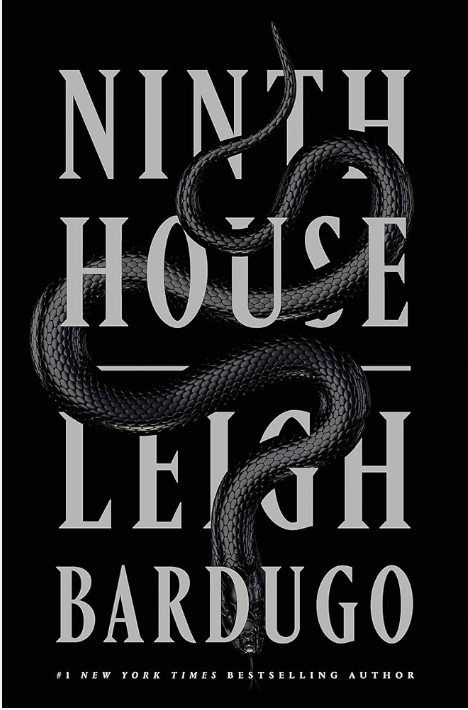
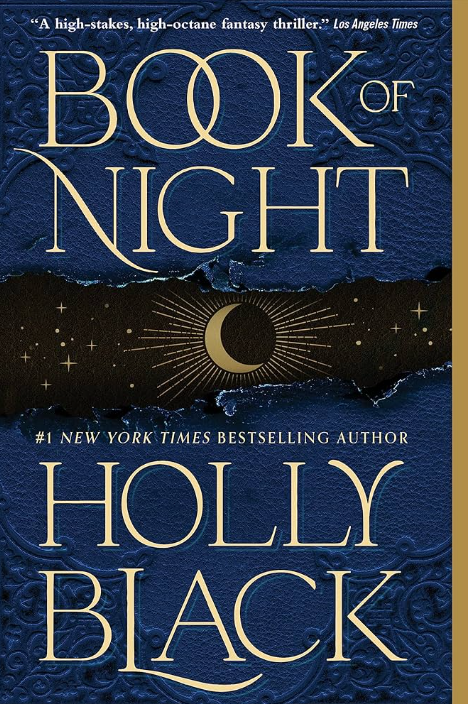
Leigh Bardugo and Holly Black, both well-established players in the YA Fantasy and now Adult Fantasy genres, have made little secret of their friendship and creative partnership over the last few years. Both authors reference the other in the Acknowledgements of several books, and as their careers started about the same time and are following similar trajectories, it comes as no surprise that Bardugo and Black are both experimenting with their ‘bad girl’ capabilities with new, darker works at the same time.
Both authors have long since nailed anti-heroes that warm the heart. For me, Bardugo’s debuting series, Shadow & Bone was a good read but not a great one. But then she got me hooked with her duology in the same world (coined the Grishaverse), Six of Crows, which was so blissfully fresh, I had to admit that there might be something to this Bardugo chick. Fast forward several years and The Familiar is everything. It just is. Bardugo is showing off her heritage like a well-polished heirloom in, and that pride and personal investment shows. It’s one of my favorite stand alone novels of the last 5 years.
Similarly, Black’s debuting YA trilogy Tithe was a DNF for me. (Black is also the author to the wildly-popular Spiderwick Chronicles, geared towards intermediate readers.) Disclaimer, I’d already read The Folk of the Air series before I picked up Tithe, and the growth from series one to series two is really impressive. But, I couldn’t revert and enjoy myself. The Folk of the Air is an exemplary piece of contemporary fantasy. I think it stands as a cornerstone for what most of us think of when we imagine middle fantasy (not high fantasy like Tolkien & Sanderson, not low fantasy like your average turn and burn Romantasy novel). If someone is going to study the cultural and literary phenomena of the first 20 years of the century, The Folk of the Air needs to be in the stack. It has shaped the genre that much. Black has piddled around with a few other smaller works from the world she created for Jude Duarte, but there wasn’t much new material from her until 2022 with the release of Book of Night, which brings us (finally) to the subject of this article.
For reference:
Bardugo’s Alex Stern Series
Ninth House (2019)
Hell Bent (2023)
Dead Beat (coming 9/15/26)
Black’s Charlatan Duology
Book of Night (2022)
Thief of Night (2025)
Despite being very different, the series are similar enough that you can tell the two literary besties got together to chit chat about them, or perhaps were responding to the same writing prompt.
Both have:
Gritty, resilient, blue-collar heroines with questionable backgrounds, coming from an underworld of crime, drugs, and traumatic childhoods
Upper-crust-bred love interests
Secret magical societies
The same mom. Not really, but really
The same basic storyline - heroine accidentally loses male lead, heroine goes through hell to rescue him
Contrasting themes of rich vs poor - both heroines navigating the world of the ultra-rich, using their street smarts to dupe the toffs
Murder and mayhem and a lot of dismemberment
Darker interpretations of magic and its uses
A visceral tone and physicality that prior works don’t quite posses in either portfolio
Same same but not.
The Verdict
So, which one do you go with? Holly Black’s The Charlatan duology, or Leigh Bardugo’s Alex Stern soon-to-be trilogy? I have two answers for this, depending on where you find yourself in life.
1. Dear Sam, I’m being exiled to a remote island and I can only take one with me.
Heard. You’re taking Bardugo’s Alex Stern, and hoping your captors will drop ship you the third installment when it comes out later this year.
2. I’m inevitably going to read both, probably in a single sitting, because I have no impulse control.
Good, then you’re like me. And you’re reading Black’s Charlatan Duology first so that you’ll enjoy it. Because once you pick up Ninth House, there’s just no comparison.
Let’s break this down.
Protagonist Believability - Bardugo pulls off the backstory better with her Galaxy Stern than Black does with Charlie Hall.
Developmental Arcs - Charlie Hall unapologetically takes what she wants for 600 pages vs. Alex Stern unapologetically recreates a life for herself, taking several other characters with her along the way, and stopping every now and then to enjoy tea and poetry.
World-building and depth - Bardugo’s Yale is not only a character in and of itself, but is quite literally real. Black’s rundown Pennsylvania could be the seedy side of anywhere, and doesn’t really matter to the story itself.
Supporting cast of characters - Bardugo proves she’s still got what it takes to write a damn good entourage (one of the many reasons Six of Crows slapped) with her rag-tag bunch of trope defying nobodies. Black goes for the typical line up - jealous sister, shady boyfriend, tropey rich people, tropey poor people.
Centrality & localization of the plot - Bardugo’s second book climaxes in literal hell. Black sends Charlie Hall to a conference.
Protagonist Believability & Character Arcs
Bardugo pulls off the backstory better with her Galaxy Stern than Black does with Charlie Hall.
I’m open to debate on this, but I hold that Bardugo does this so well, one can’t really call Galaxy (Alex) an anti-hero by the end of the first book. This has to do with her values - yes, she cuts corners on honesty and legality, but her motivations are very localized - finding a place for herself in the world and making things right for the people she loves. While there are moments of “eat the rich”, Alex always returns to the relatively small goal of just trying to get through the day in one piece.
While Alex is having one hell of a semester (not in a good way), the reader also gets the sense that she is healing even as she’s getting banged around a lot. This has to do with her growing interdependency with other characters, who move in to support her and alter her previously survivalistic motivations. Alex begins, in her unique way, to build something for herself, even when it’s slipping through her fingers. And it’s that thing which she fights for, and rallies others to fight for.
Charlie Hall has more of a social chip on her shoulder and a strong prejudice against the upper class that lacks much empathy and makes her feel shallow. Her choices often feel a little harsher than they need to be, which conveys her character well, but doesn’t do much towards relatability to the reader. Her character also doesn’t arc much, staying true to herself but also to a lot of unhealthy relationships, habits, and self-delusions.
World Building & Depth
If word on the street is true, Bardugo was originally planning for 6+ installments in the Alex Stern series. Likely because of this, she poured a lot more investment into worldbuilding and depth, spacing the assimilation period for the reader out over much of the first book, and even introducing new elements in the second. While it’s still a lot to grasp in the first few chapters, Bardugo leads you slowly through it in a way that makes the (average fantasy) reader alert but not overwhelmed.
The story is set at a very real Yale University, and every scrap and quote and column featured in the story actually exists on Yale’s campus. As a result, Alex’ Yale is meticulously researched and grounded. It not only feels real as a setting, it is real. I absolutely cannot fathom the sheer amount of time, research, and organizational capability it took slot Alex’s Yale into what actually exists as seamlessly as Bardugo has. But I can tell you as an author I’m not going to try it anytime soon (and I understand why Bardugo chopped the series in half from her original plan).
Charlie Hall’s world is also set in a real place, which is a little corner of Pennsylvania where Black has spent considerable time, but other than the distinctly blue-collar nature of the place, it could be the seedy side of anywhere. The world building is thrown quickly at the reader, and I confess I still don’t understand some parts of it, centered around the governing body of the magical system, which was superfluously detailed, making it difficult to remember who is who and why and what kind of magic they practice and if it even matters. (Spoiler alert, it doesn’t.) It also felt sort of weirdly localized. Like the newly discovered magic is a global phenomenon but everyone who’s anyone is in rural PA.
Supporting Cast of Characters
Bardugo nailed the entourage trope with Six of Crows, and she’s nailed it again with Alex Stern. She builds up a rag tag group of characters around Alex that are layered and loyal, though their motivations for that loyalty differ significantly. Like Six of Crows, I personally like that none of these characters are particularly close to Alex in the typical ways. No sisters, boyfriends, long-time best friends, etc.. The fact that Bardugo can attach the reader to the rando cop that doesn’t want to be here and a socially awkward grad student who is failing to launch signifies her character building ability. I was more invested in these side characters than I was in Black’s protagonist.
Black, on the other hand goes for the typical line up: a jealous little sister who needs a strong talking to, a boyfriend with a shady past, and a handful of minor characters who are all manipulating each other according to their individual motivations and who I had difficulty keeping straight. Tropey rich people. Tropey poor people. Mmmk.
Centrality & Localization of the Plot
So, both authors take the reader on little field trips in book 2. Bardugo’s Alex goes to literal Hell along with her faithful companions, and of course all…well, hell, breaks loose. Even as they literally & figuratively descend below Yale, Bardugo keeps you firmly grounded in the world she’s built, making Hell seem like a extension of rather than an alternative to.
Black on the other hand takes you out of the small town Charlie’s been banging around in for the whole narrative and takes you to… a conference? Yep. Like with name tags and breakout sessions. And yes, it’s as jarring as it sounds. And that’s all that really needs to be said on the matter.
Tone or What the Reader Comes Away With
I think I can sum this up quickly.
Charlatan - the title says it all. Blue-collar, gritty, and tough as nails that turns into chincey, cheap, transactional. Characters don’t evolve much as a result of their circumstances. Charlie wins. Rich people get bent.
Alex Stern - crime underbelly, gritty, and tough as nails that turns into interdependent, empathetic, poetic, and, ultimately, healing for several characters (so far).
What did Black do well?
I enjoyed The Charlatan Duology, but I didn’t love it, which should be obvious to you by now. Still, I give it a strong pat on the back. Why? First, because Black attempted it. With almost all of her prior work in the fae/faerie realm, so to speak, a gritty contemporary fantasy was a big swing at the plate. She didn’t knock it out of the park, but not because she isn’t capable. I truly don’t think she poured herself into this one. She says in the Acknowledgements of Thief of Night that she was challenged to write a story based on its final line - something something about Charlie Hall had finally met her match. Which is dopey, for sure - not the challenge, but the line itself. Still, that leads me to believe this was a sort of exercise in something new, which honestly a lot of authors who make it big on a single series/universe don’t even attempt (how we doing over there, J.K.?).
So this isn’t a consolation prize - I genuinely respect Black for the attempt, and I hope it leads to a more developed and better written work in the future.
Also, as a final note, I appreciated the non-formulaic romance trope, a sort of lovers to enemies to lovers which is refreshing in the space, but I felt Charlie Hall and her leading man deserved something more than a golf-cart at a conference center. Or perhaps they didn’t, which is a problem in and of itself.
Okay, one more final note. It bugged me a bit that the book was called Book of Night, when the actual book it centers around is called the Book of Blights, which would have made a far more compelling title. What’s a blight? I don’t know. Let me read and find out.
But I’m guessing some marketing projection somewhere rejected it for the keyword strong title it ended up with, and that bugs me. Sorry, Holly.